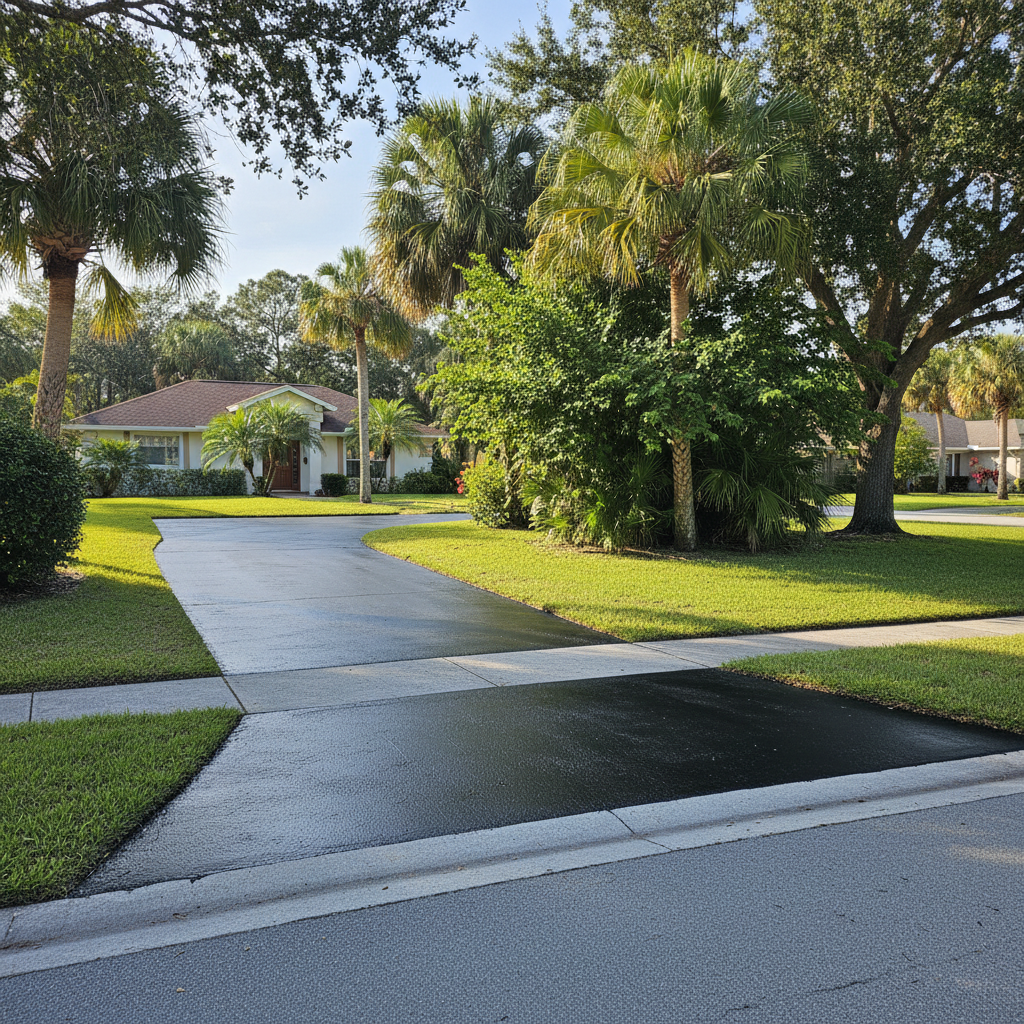
So, you're eyeing your asphalt driveway, right? Maybe it's looking a bit faded, or you've spotted a few tiny cracks popping up. You figure it's time for sealcoating. Smart move! It's honestly one of the best ways to protect your investment here in Daytona, especially with our scorching sun and those sudden afternoon downpours. But I've seen people make some truly baffling mistakes trying to get this done, and it almost always costs them more time, money, and a whole lot of frustration.
Mistake #1: Not Asking for References (and Actually Calling Them)
This one's a classic. Someone gets a quote, it's super cheap, and they just jump on it. They don't bother asking for references, or if they do, they just nod when the contractor says, "Oh yeah, I've got plenty." You absolutely have to call those people! Ask those past customers if the contractor showed up on time, if the crew acted professionally, if they cleaned up properly. And, most importantly, find out how the sealcoat held up after a few months or even a year. Did it peel? Did it fade super fast? You'd be amazed what you can learn from a quick phone call.
Mistake #2: Falling for the "One-Coat Wonder"
Any good, reputable contractor, especially here in Florida where the sun just bakes everything, knows you need two coats of sealcoat for a job done right. One coat might look okay for a week or two, but it won't give you the protection or durability your driveway needs. It'll wear off way too fast, leaving your asphalt exposed again. If a contractor quotes you a price for just one coat, or tries to convince you it's "extra thick" and only needs one, that's a huge red flag. A proper sealcoating job is an investment, and two coats are standard practice for a very good reason.
Mistake #3: Ignoring the Prep Work
Sealcoating isn't just about sloshing black stuff onto your driveway. The prep work is absolutely critical. If a contractor just shows up, blows off a few leaves, and starts spraying, you're headed for trouble. A proper job involves cleaning the surface thoroughly – sometimes that even means power washing – filling cracks, and treating any oil stains. If they skip these steps, the sealcoat won't stick right, and you'll see it peeling or flaking off way too soon. I've seen driveways in places like Ormond-by-the-Sea where the salty air and constant humidity make good prep even more vital. Don't let anyone cut corners here, okay?
Mistake #4: Not Getting a Written Contract (with the Right Details)
I can't emphasize this enough. Get everything in writing! And make sure that contract spells out exactly what's being done. It should specify:
- What kind of sealcoat product they're using (ask for the brand and product name)
- How many coats they'll apply
- All the prep work included (crack filling, oil stain treatment, cleaning)
- The total cost, with no hidden fees
- A clear timeline for when they'll finish
- Any warranty information
Without a written agreement, if something goes wrong, you're pretty much out of luck. It's your word against theirs, and that's a battle you usually won't win.
Mistake #5: Paying Too Much Upfront
A small deposit is perfectly reasonable, especially to cover materials. But if a contractor demands a huge chunk of the total cost upfront, be cautious. Most reputable companies, like us at Allied Asphalt Contractor, will ask for a fair deposit and then the rest once the job is satisfactorily completed. If they need 50% or more before they even start, they might be using your money to fund another job, or worse, they might just disappear. Protect your hard-earned cash, folks.
Mistake #6: Not Understanding the Curing Time
Once your driveway gets sealcoated, you can't just drive on it right away. It needs time to cure. The exact time depends on the product they used and the weather conditions – sunnier, warmer days mean it dries faster. But generally, you're looking at 24 to 48 hours for foot traffic and 48 to 72 hours (or sometimes even longer) before you can drive on it. If a contractor tells you it's good to go in just a few hours, they're either using a cheap, fast-drying product that won't last, or they're simply not being honest. Driving on it too soon will mess up the finish and shorten its lifespan. Make sure you get really clear instructions on when you can use your driveway again.
Listen, sealcoating is a fantastic way to make your asphalt last longer. Just make sure you do your homework and ask the right questions. Don't let a bad experience turn a smart investment into a giant headache.